
 Facebook
 X
X LinkedIn
 Forward
Learning Community: Practice Transformation for Pediatric Behavioral Health: Measurement-Informed Care for Childhood Trauma and Family Stress - Office Hours (August 5, 2026)
About Office Hour Sessions
The Office Hours are times when you can meet with the faculty members outside of the live Learning Community sessions to discuss the content presented during the live sessions, receive assistance with the post work assignments, and get answers to any other related issues you may have.
Office hour sessions will take place on July 1, 2026 and August 5, 2026 from 2-3PM ET. To join the session, select the Continue tab and then the Continue button to navigate to the Zoom link.
Post Work
Post work is due one week before the next live Learning Community session. The faculty members are available during the office hour session to help with any questions regarding the post work. The post work attachment(s) are available at the bottom of this page.
Post Work Directions:
- Download the ________ post work from the bottom of this page.
- Schedule a regular meeting with your participating team members and meet with your team.
- Discuss and complete the worksheet together.
- Submit the worksheet by selecting the Continue tab and the Continue button to navigate to the post work submission link. Only the team lead needs to submit the assignment.
Post work due date: August 12, 2026
Schedule
This activity meets the first and third Wednesday of every month from 2-3pm ET. The activity will also meet on the fifth Wednesday of the month in July. Below are the dates of the sessions.
Learning Sessions
- June 3, 2026
- June 17, 2026
- July 15, 2026
- July 29, 2026
- August 19, 2026
- September 2, 2026
- September 16, 2026
Office Hour Sessions
- July 1, 2026
- August 5, 2026
Faculty
 Stephen DiGiovanni, MD
Dr. Stephen DiGiovanni earned his medical degree from Jefferson Medical College at Thomas Jefferson University in 1996. He completed his pediatric residency and served as Chief Resident at Maine Medical Center from 1997 to 2001. He then spent nine years in community practice at Bayview Pediatrics in Yarmouth, Maine, providing comprehensive primary care.
In 2011, Dr. DiGiovanni returned to Maine Medical Center, where he combines clinical care with teaching and quality improvement in the Pediatric Residency Clinic. Since 2013, he has served as Medical Director of the Maine Medical Center Primary Care Clinics, leading programs that deliver high-quality, equitable care to a diverse patient population while advancing medical education for residents and students.
Dr. DiGiovanni also serves as Medical Lead for the MaineHealth Adverse Childhood Experiences (ACEs) and Resiliency Program. In this role, he advances team-based models to assess, intervene and monitor (AIM) pediatric adversity, developmental concerns, behavioral health symptomology and health related social needs to build resiliency for children and families.
 Lisa Leary, MS
Lisa Leary, MS, is an educator and healthcare improvement strategist with a strong commitment to advancing high-quality, value-based care while fostering environments that support workforce well-being and professional growth. She has partnered with healthcare and public health organizations to strengthen clinical workflows, evaluate program impact, reduce inefficiencies, and support teams in implementing meaningful, measurable change.
Lisa has extensive experience working with professionals across the helping professions, including community health workers, public health practitioners, and primary and specialty care providers. Her work focuses on translating data and frontline experience into practical improvements that enhance care delivery and learning within collaborative settings.
Lisa holds a master’s degree in Evaluative Clinical Science from Dartmouth College and is a Certified Six Sigma Green Belt. She brings more than 20 years of experience in facilitation, training, qualitative research, clinical evaluation, and practice transformation.
 Kristina Mody, MPH
Kristina Mody, MPH is Director of Practice Transformation at the California Quality Collaborative (CQC), where she leads the Behavioral Health Integration Initiative, accelerating the integration of behavioral health into primary care across California. An experienced improvement advisor and coach, she provides technical assistance and collective solutions to support sustainable, high‑value care transformation. Kristina authored CQC’s Behavioral Health Integration Curriculum, Pediatric BHI Toolkit, and an issue brief on sustainable financing for BHI, speaks frequently on integrated care, and co‑chairs the Value‑Based Care Workgroup for the Collaborative Family Healthcare Association.
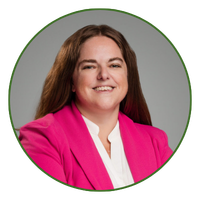 Addie Van Zwoll, PhD, MJ, LCSW, LMSW
Dr. Van Zwoll has worked in the school-based healthcare field at the local, state, and national level since 2011. As a clinical social worker and manager of behavioral health services at a local SBHC, she was able to provide direct clinical services and expand behavioral health programming, including the introduction of alternative to suspension programs and a calm room. Ms. Van Zwoll also served on the Illinois School-Based Health Alliance Steering Committee for several years. Ms. Van Zwoll is passionate about working with adolescents and increasing access to mental health care. She joined the SBHA in 2023 and is currently working on a variety of projects, including both program and consulting work.
Dr. Van Zwoll is a graduate of Western Michigan University (Bachelor of Social Work, Bachelor of Arts-Criminal Justice, 2006), University of Michigan (Master of Social Work, 2007), Loyola University Chicago (Master of Jurisprudence in Children’s Law & Policy, 2014), has a certificate in School Discipline Reform also from Loyola University Chicago, and is currently pursuing her PhD in Social Work from Loyola University Chicago.
Weitzman Institute Disclosure Statement
It is the policy of the Weitzman Institute to ensure that Continuing Education (CE) activities are independent and free of commercial bias. To ensure educational content is objective, balanced, and guarantee content presented is in the best interest of its learners' and the public, the Weitzman Institute requires that everyone in a position to control educational content disclose all financial relationships with ineligible companies within the prior 24 months. An ineligible company is one whose primary business is producing, marketing, selling, re-selling or distributing healthcare products used by or on patients. Examples can be found at accme.org.
Faculty participating in a Weitzman Institute-sponsored activity must disclose to the planning committee and audience all financial or other relationship(s) with ineligible companies.
Select the Continue button to navigate to the Zoom link and/or post work submission.
If you experience any technical issues, please submit a ticket to our support center. A representative from our team will respond as soon as possible.