
 Facebook
 X
 LinkedIn
 Forward

GROWING Behavioral Health Training in the US: Organizational Readiness and Capacity (December 11, 2026)
Program Information
The GROWING-Behavioral Health in the US: 3-Part Webinar Series meets once-monthly via videoconferencing sessions and focuses on strengthening the behavioral health workforce in community-based settings like Community Health Centers, Certified Community Behavioral Health Clinics, and Rural Health Clinics. Designed for behavioral health workforce leaders and administrators, behavioral health providers, and care team members, the series explore key behavioral health workforce development topics identified through a national environmental scan conducted by the GROWING-BH Technical Assistance Program. Each webinar session will provide participants with practical strategies, evidence informed recommendations, and real world examples to support workforce growth and sustainability. Through discussions of implementation experiences, lessons learned, and successful practices, participants will gain actionable insights to strengthen behavioral health workforce development within their organizations and communities.
This activity meets December 2026 - February 2027, every 2nd Friday of the month from 2pm-3pm ET.
Acknowledgement of Support
The Health Resources and Services Administration (HRSA), Department of Health and Human Services (HHS) provided financial support for this BHWD TA Program. The award provides 100% of total costs and totals $1,500,000.00. The contents are those of the author. They may not reflect the policies of HRSA, HHS, or the U.S. Government.
Target Audience
This activity is appropriate for the following audiences:
- Behavioral Health Workforce Leaders
- Behavioral Health Administrators
- Behavioral Health Providers
- Behavioral Health Care Team Members
Learning Objectives
Upon completion of this activity, participants should be able to do the following:
- Identify key factors that influence an organization's ability to develop and sustain a strong behavioral health workforce.
- Elaborate on behavioral health workforce challenges that inhibit workforce development within their own organizational settings.
- Describe evidence-informed strategies and recommendations for strengthening behavioral health workforce development in community-based experiential sites.
AMA Designation Statement
Moses/Weitzman Health System Inc. designates this live activity for a maximum of 3 AMA PRA Category 1 Credit(s)™. Physicians should claim only the credit commensurate with the extent of their participation in the activity.
Activity summary
- 1.00 AAPA Category I CMEThrough Joint Accreditation, Moses/Weitzman Health Center, Inc./Weitzman Institute is able to provide American Academy of PAs (AAPA) credit to physician assistants at its activities. Participants should only claim commensurate credit with the extent of their participation in the activity.
- 1.00 ACE/ASWBThrough Joint Accreditation Moses/Weitzman Health Center, Inc./Weitzman Institute is able to provide Association of Social Work Boards (ASWB) credit to social workers at its activities.
- 1.00 AMA PRA Category 1 Credit™Through Joint Accreditation, Moses/Weitzman Health Center, Inc./Weitzman Institute is able to provide AMA PRA Category 1 Credit™ to physicians at its activities via Accreditation Council for Continuing Medical Education (ACCME).
- 1.00 ANCCThrough Joint Accreditation, Moses/Weitzman Health Center, Inc./Weitzman Institute is able to provide American Nurses Credentialing Center (ANCC) nursing credit to nurses at its activities.
- 1.00 APAThrough Joint Accreditation, Moses/Weitzman Health Center, Inc./Weitzman Institute is able to provide American Psychological Association (APA) credit to psychologists at its activities.
- 1.00 Participation Hour(s)You are able to download an unaccredited Participation Certificate for your records if you are not able to use any of the credit types provided for this activity or if this activity does not offer accredited CME/CE credits.
Schedule
This activity meets the second Friday of every month from 2-3pm ET. Below are the dates of the sessions:
- December 11, 2026
- January 8, 2027
- February 12, 2027
Facilitator
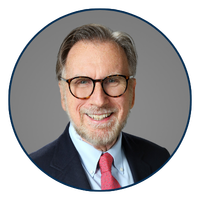 Tim Kearney: Dr. Kearny earned his BA with a combined major in Psychology and Spanish Literature at Yale University and pursued graduate work at Fuller Theological Seminary where he earned his MA (Theology) from the Graduate School of Theology an d his PH.D. (Clinical Psychology) from the Graduate School of Psychology. He has also completed the post graduate Primary Care Behavioral health training program at the University of Massachusetts Medical School, Worchester. He is licensed psychologist in Connecticut. He joined the Community Health Center behavioral health staff in 1998. He is the author of Caring for Sexually Abused Children: A Handbook for Families and Churches (Intervarsity Press, 2001). In addition to administrative and clinical leadership of the Behavioral Health programs at CHC, Dr. Kearney supervises and trains postdoctoral psychology residents, co-leads psychotherapy groups with students and younger staff to train them in the provision of child group therapy, and provides direct client care with clinical focus of providing care to children and adolescents and their families, especially those impacted by medical illness, trauma, and abuse.
Didactic Presenters
Megan McFarlane: Megan McFarlane is a Behavioral Health Workforce Consultant for Community Health Center, Inc. In this role, she serves as as subject matter expert, directing analysis and reporting of stakeholder interviews and contributing to project reports. Prior to CHC, Inc., Megan worked at the MITRE Corporation as a Health Communication Science Lead, where she led cross-functional teams and directed end-to-end qualitative research studies for projects serving multiple federal agencies. Before her time at MITRWE, Megan was an assistance professor of communication at Marymount University in Arlington, VA, where her research agenda focused primarily on women's health and maternal health.
 Shannon Hanson: Shannon Hanson is a Senior Program Manager for Education at the Weitzman Institute, where she oversees the planning and implementation of multiple continuing education initiatives for healthcare professional nationwide. In this role, she manages the full lifecycle of diverse educational programs, collaborates with internal and external stakeholders, and leads and mentors teams to ensure high-quality, impactful learning experiences. She is committed to advancing innovative, equitable, and community-responsive educational approaches that strengthen the health care workforce. She holds a Bachelor of Arts from Fairfield University and a Master of Social Work from the University of Connecticut.
Panelists
 Chelsea McIntosh: Chelsea McIntosh, PsyD, ABPP is a clinical psychologist and the behavioral health therapy student and postdoctoral psychology residency programs. Dr. McIntosh has worked at CHC since her postdoctoral year in 2014 and has been a supervisor since 2016. Dr. McIntosh obtained her undergraduate degree at Drew University and her doctorate in clinical psychology from Baylor University. Dr. McIntosh trained as a generalist, working across a diversity of settings such as probation, adolescent residential, university and other educational settings, as well as the outpatient settings. Her clinical interest focus on interpersonal , systems-based work, and the implementation of general practice, taking evidence-based treatment and adopting it to various populations and settings. An additional interest is the development of clinical identity and how it impacts ethical decision making and the therapeutic relationship.
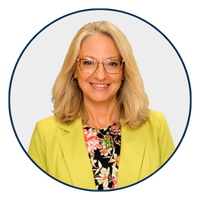 Mandi Gingras: Mandi Gingras is the Director of Education for 3RNET, the National Rural Recruitment and Retention Network, a nonprofit organization connecting health professional with careers in rural and underserved communities. She leads recruitment and retention education for 3RNET members and safety net facilities nationwide. Mandi brings almost 20 years of healthcare workforce recruitment experience, including prior roles with New Hampshire-Vermont Recruitment Center, Bi-State Primary Care Association, and McLaren Health Care/ Karmanos caner Institute. Her back ground spans primary care, oral health and surgical specialty recruitment, along with workforce consulting, J-1 wavier, and loan repayment program support. A lifelong resident in rural communities, Mandi is passionate about helping organization attract and retain providers who will thrive in rural and underserved settings. She is an active member of SHRM, ASHHRA, and AAPPR and completed recruiter credential training through HealthcareSource and Lean human Capital.
 Heather Jefferies: As the Executive Director of OCBH, Heather Jefferies participates in a wide variety of forums to ensure OCBH's members' voices are present and actionable. Over the last 30 years working in Substance Use Disorder and Mental Health, I have been privileged to sit in a variety of seats. I provided direct services as a clinician, served as a program director, an Executive and Board Officer. I developed, implemented, and operated equitable, accessible programming within government BH clinics, non-profit clinic settings and criminal justice programs. In each of these seats I typically served individuals who were multisystem involved and frequently had co-occurring concerns. I have been honored to support moving services in Oregon toward an increasing focus on whole-person healthcare and creating continuous improvement in both delivery and operations across the sector. I intimately understand both the strengths and struggles of Oregon systems that support Oregonians on their path to recovery and health. As the Executive Director of Oregon Council for Behavioral Health, I have charged by the OCBH Board to grow the association's capacity to represent, serve and lift the voice of our diverse statewide integrated continuum of Behavioral Health Care. OCBH had over 60 agency members providing the full continuum of BH services from prevention through residential services and withdrawal management including urban, rural, frontier, for all persons across the lifespan.
Weitzman Institute Disclosure Statement
It is the policy of the Weitzman Institute to ensure that Continuing Education (CE) activities are independent and free of commercial bias. To ensure educational content is objective, balanced, and guarantee content presented is in the best interest of its learners' and the public, the Weitzman Institute requires that everyone in a position to control educational content disclose all financial relationships with ineligible companies within the prior 24 months. An ineligible company is one whose primary business is producing, marketing, selling, re-selling or distributing healthcare products used by or on patients. Examples can be found at accme.org.
Faculty participating in a Weitzman Institute-sponsored activity must disclose to the planning committee and audience all financial or other relationship(s) with ineligible companies.
Accreditation Statement
In support of improving patient care, Moses/Weitzman Health System Inc. and its Weitzman Institute is jointly accredited by the Accreditation Council for Continuing Medical Education (ACCME), the Accreditation Council for Pharmacy Education (ACPE), and the American Nurses Credential Center (ANCC) to provide continuing education for the healthcare team.
By completing this activity, you provide Moses/Weitzman Health System Inc. the permission to share completion data with the ACCME and the certifying board(s).

Please note that continuing education credit requirements differ by state, jurisdiction, and licensing agency. It is your responsibility to confirm if your licensing/credentialing agency will accept the credits offered by this activity.
Available Credit
- 1.00 AAPA Category I CMEThrough Joint Accreditation, Moses/Weitzman Health Center, Inc./Weitzman Institute is able to provide American Academy of PAs (AAPA) credit to physician assistants at its activities. Participants should only claim commensurate credit with the extent of their participation in the activity.
- 1.00 ACE/ASWBThrough Joint Accreditation Moses/Weitzman Health Center, Inc./Weitzman Institute is able to provide Association of Social Work Boards (ASWB) credit to social workers at its activities.
- 1.00 AMA PRA Category 1 Credit™Through Joint Accreditation, Moses/Weitzman Health Center, Inc./Weitzman Institute is able to provide AMA PRA Category 1 Credit™ to physicians at its activities via Accreditation Council for Continuing Medical Education (ACCME).
- 1.00 ANCCThrough Joint Accreditation, Moses/Weitzman Health Center, Inc./Weitzman Institute is able to provide American Nurses Credentialing Center (ANCC) nursing credit to nurses at its activities.
- 1.00 APAThrough Joint Accreditation, Moses/Weitzman Health Center, Inc./Weitzman Institute is able to provide American Psychological Association (APA) credit to psychologists at its activities.
- 1.00 Participation Hour(s)You are able to download an unaccredited Participation Certificate for your records if you are not able to use any of the credit types provided for this activity or if this activity does not offer accredited CME/CE credits.
If you experience any technical issues, please submit a ticket to our support center. A representative from our team will respond as soon as possible.
Required Hardware/Software
- This online activity requires use of a device connected to the Internet, such as a computer tablet or mobile device.
- The activity will take place over Zoom, which must be accessed directly from within the activity.